



How Mining Rim Sizes Guide Global Heavy Equipment Selection
(Keywords integrated: 25-10.00/2.0 Mining rim / 25-11.25/2.0 Mining rim / Wheel rim manufacturer)
Mining buyers often ask: "How do mining rim sizes affect equipment performance in different countries?" The answer depends on matching rim dimensions, tire specifications, vehicle load requirements, and working conditions.
Mining operations in Indonesia, Brazil, Peru, India, Australia, Saudi Arabia, Egypt, and South Africa use different types of heavy equipment according to local resources and geological conditions. Coal mines, iron ore projects, copper mines, and construction-related operations require wheel solutions that match specific machines.
Incorrect rim selection can create practical problems, including installation difficulties, unsuitable tire mounting, and increased maintenance complexity. Therefore, mining contractors and suppliers usually evaluate technical parameters before making a purchase.
AQRIM provides industrial wheel and rim information for mining and special equipment applications:
https://www.aqrim.com
Understanding mining rim specifications helps distributors, equipment owners, and government-supported mining projects make better purchasing decisions.
![Mining wheel rim product image from AQRIM product information]
Why Rim Size Becomes a Key Purchasing Question
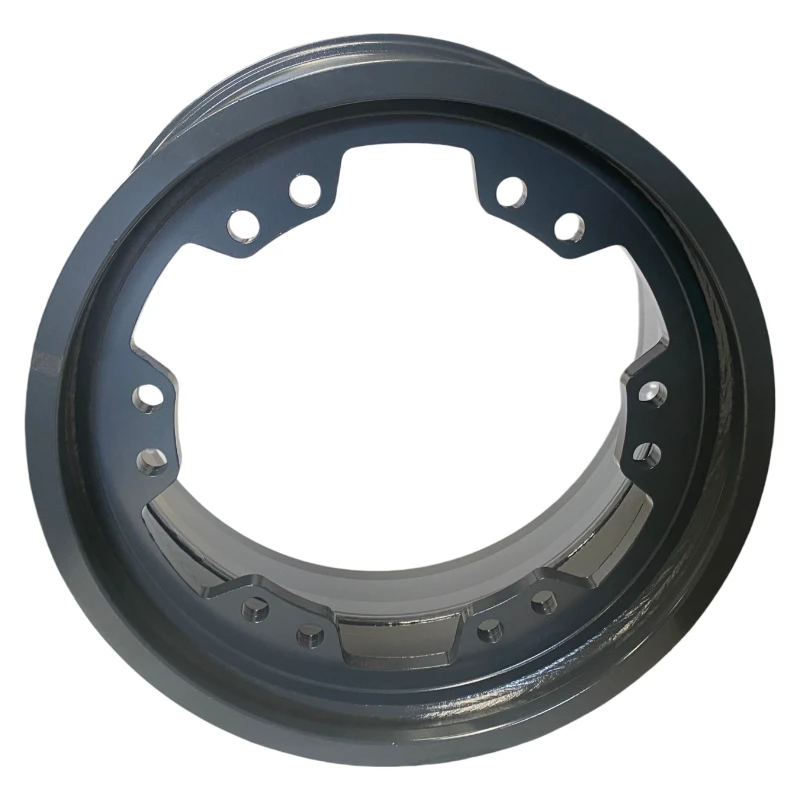
Mining equipment operates under conditions that differ from those of ordinary vehicles. Large loaders, mining transport vehicles, and special machinery experience:
· Heavy material loading.
· Continuous working cycles.
· Uneven roads.
· Dust and moisture exposure.
· Remote maintenance conditions.
In Indonesia, coal mining fleets often operate in wet environments with heavy rainfall. Equipment suppliers must consider tire-and-rim compatibility for muddy haul roads.
In Brazil and Peru, mining vehicles commonly transport minerals over long distances. Copper and iron ore operations require components that are compatible with large machinery systems.
In Australia, remote mine sites depend on planned maintenance because equipment downtime can affect transportation schedules.
In India, Pakistan, and Afghanistan, mining and infrastructure projects often involve different generations of machinery, making correct replacement part identification important.
Understanding Mining Rim Specifications
Mining rim names such as 25-10.00/2.0 Mining rim and 25-11.25/2.0 Mining rim represent specific technical categories used in industrial wheel applications.
The numbers describe rim dimensions and structure information. However, buyers should not select products only by model name. They should verify:
· Tire size compatibility.
· Vehicle manufacturer requirements.
· Mounting dimensions.
· Load conditions.
· Working environment.
A professional Wheel rim manufacturer normally reviews technical drawings and equipment information before recommending a solution.
Product Specification, Technical Description, Common Application Consideration
25-10.00/2.0 Mining rim Industrial mining rim specification. Requires matching tire and equipment data
25-11.25/2.0 Mining rim Heavy equipment rim category Suitable for specific vehicle requirements
29-13.00/2.5 Mining rim Large mining application rim Used for larger equipment systems
10.0-20 Rims Industrial vehicle rim size category Construction and special equipment
10.0-20 two-piece rim, Two-section structure, Easier maintenance for certain applications
10.0-20 three-piece rim, Multi-section design, Used for specialized tire installation
Regional Applications and Supply Chain Effects
Southeast Asia
Indonesia has become an important mining market, especially for coal and mineral resources. Local suppliers often need access to technical rim information because imported mining machinery requires accurate replacement components.
Middle East and North Africa
Saudi Arabia, Egypt, Libya, Algeria, and Sudan operate mining and infrastructure projects in dry, dusty conditions. Equipment suppliers often evaluate products such as Desert Rims and Construction Rims for suitability in specific applications.
Eurasia
Russia, Kazakhstan, and Uzbekistan operate mining projects under different climate conditions. Rim selection must consider temperature range, equipment usage, and maintenance planning.
Africa
The Democratic Republic of the Congo, Tanzania, Nigeria, and Ethiopia continue to develop mineral resources. For local distributors, understanding industrial rim categories helps them communicate with international equipment suppliers.
The Relationship Between Rim Manufacturing and Equipment Compatibility
Mining rim quality depends on multiple production factors.
Manufacturing FactorTechnical Purpose
Steel material selection provides a structural foundation
The forming process creates the required rim shape
Welding technology connects structural components
Machining accuracy supports mounting Compatibility
Incompatibilities confirm manufacturing requirements
When discussing stability or consistency, conclusions should be based on measurable information such as material specifications, production processes, dimensional accuracy, and application conditions.
A mining rim cannot be considered reliable solely on its appearance. Engineering data provides the basis for evaluation.
How Suppliers Can Improve Purchasing Decisions
Mining equipment suppliers and buyers should prepare complete information before contacting manufacturers:
Vehicle brand and model.
Tire specification.
Existing rim information.
Operating environment.
Required quantity and replacement schedule.
Companies using Tongli, Lingong, XCMG, and SANY vehicle wheels should confirm the original equipment requirements before selecting alternative rim products.
For special applications, categories such as Modular Rims, Non-Standard Rims, and Special Machinery Mining Rims may require additional technical discussion.
AQRIM as a Technical Reference Platform
The mining industry requires transparent technical communication between manufacturers, suppliers, and end users.
AQRIM provides product information and application references that help international users understand industrial wheel solutions:
https://www.aqrim.com
For mining markets across Indonesia, Brazil, Peru, India, Egypt, Saudi Arabia, Russia, Kazakhstan, Africa, and other regions, correct rim selection supports better equipment management and supply chain planning.
The key principle remains simple: mining rims should be selected according to engineering requirements, not only product names.
Referenced Keywords
25-10.00/2.0 Mining rim
25-11.25/2.0 Mining rim
29-13.00/2.5 Mining rim
Wheel rim manufacturer
Mining Wide Body Vehicle Rims
Mining Wide Body Vehicle
Construction Rims
Loader Rims
Desert Rims
Modular Rims
Non-Standard Rims
Special Machinery Mining Rims
10.0-20 Rims
10.0-20 two-piece steel wheel rim
20-inch Retaining
10.0-20 two-piece rim
20-inch Wheel Outer
10.0-20 three-piece steel wheel rim
20-inch Locking
10.0-20 three-piece rim
10.0-20 three-piece tubeless steel wheel
10.0-20 three-piece tubeless rim
Tongli vehicle wheels
Lingong vehicle wheels
XCMG vehicle wheels
SANY vehicle wheels