


As a core load-bearing component in vehicles, construction machinery and other equipment, wheel rims have a direct bearing on operational safety and service life. However, as wheel rims are constantly exposed to complex outdoor environments, they are subject to rain and snow, salt corrosion, UV radiation and mechanical wear, making them highly susceptible to rust and oxidation. This not only affects their appearance but also weakens their structural integrity, potentially leading to serious safety hazards in severe cases. Consequently, corrosion protection for wheel rims is of paramount importance. In the wheel rim manufacturing process, comprehensive anti-corrosion technology is an indispensable and critical component.
Wheel rim corrosion is primarily caused by a combination of environmental and intrinsic factors. Environmental factors such as salt, humidity and industrial dust accelerate metal oxidation; meanwhile, wheel rims are typically made of aluminium alloy or steel, materials which are chemically reactive and prone to reacting with external substances. Consequently, the industry has developed a comprehensive anti-corrosion system covering the entire process-from material optimisation to surface treatment-which balances protective performance with cost-effectiveness.
Surface coating is one of the most widely used methods of corrosion protection today. Among these, electrophoretic coating technology utilises an electric field to ensure the paint adheres evenly to the wheel rim surface, forming a dense protective film. It offers advantages such as strong adhesion, excellent corrosion resistance and a uniform coating, effectively blocking corrosive agents such as water and oxygen. Powder coating technology, on the other hand, utilises the principle of electrostatic adhesion to evenly apply powder paint to the wheel rim surface, which is then cured at high temperatures. The resulting coating is highly durable, wear-resistant and UV-resistant, making it suitable for passenger car wheel rims where high standards of appearance and protection are required.


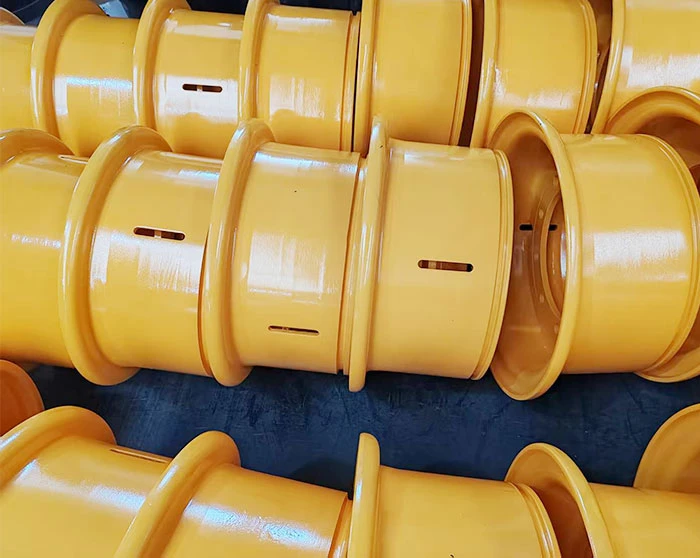
Electroplating is also a key method for protecting wheel rims against corrosion, primarily involving processes such as chrome plating and zinc plating. Chrome plating produces a bright, attractive finish that combines corrosion resistance with decorative appeal, and is widely used on high-end wheel rims; zinc plating, on the other hand, utilises the principle of sacrificial anode protection, whereby even if the coating is damaged, the zinc layer corrodes first, thereby protecting the base material of the wheel rim. This makes it suitable for wheel rims used in harsh environments, such as those found in construction machinery.
In addition to surface treatment, material optimisation and sealing measures can also enhance corrosion resistance. The use of corrosion-resistant alloys, such as aluminium alloys and stainless steel, can reduce the risk of corrosion at source; fitting seals at the junctions between the wheel rims, tyres and hubs prevents moisture and salt from seeping into the gaps, thereby reducing localised corrosion. Furthermore, regular maintenance, such as cleaning and waxing, can also extend the service life of the wheel rim's anti-corrosion coating.
With the advancement of industrial technology, wheel rim anti-corrosion technology is evolving towards greater environmental sustainability, efficiency and durability. The application of new eco-friendly coatings and composite coating technologies has not only enhanced protective performance but also reduced environmental pollution. In the future, through the integration of digital and intelligent manufacturing, anti-corrosion technology will become increasingly precise and customised, providing more reliable and long-lasting protection for wheel rims in a variety of operating conditions.