


Heavy-duty mining wheel rims work under continuous impact, vibration and cyclic load. Regular inspection identifies hidden defects before rim failure and avoids unexpected equipment downtime. Anqiang introduces inspection procedures for heavy-duty mining wheel rims, covering factory delivery inspection and on-site routine check.
1. Visual Surface Inspection
Visual check is the first step for rim inspection. Examine the whole rim surface, including spokes, hub, fillet transition zones and outer/inner rim edges. Look for visible marks: surface cracks, chipping, deformation, dents and casting surface defects. Check bolt holes for wear, scratches or local damage. Any visible crack marks require further testing.
2. Dimension and Geometric Tolerance Check
Measure key parameters to confirm compliance with design drawings. Items include rim diameter, rim width, center bore size, bolt hole diameter, pitch circle diameter and rim runout. Dimension deviation and out-of-roundness will cause uneven load during operation and accelerate damage. All measured data should match the specified technical range.
3. Nondestructive Testing (NDT) for Internal Defects
Surface inspection cannot detect internal flaws. Nondestructive testing finds hidden defects inside the rim body. Common methods include ultrasonic testing and magnetic particle testing. These tests check for shrinkage cavities, porosity, inclusions and internal cracks generated during casting. NDT is required for batch sampling before shipment. Rims with unqualified internal defects are rejected.
4. Mechanical Property Sampling Test
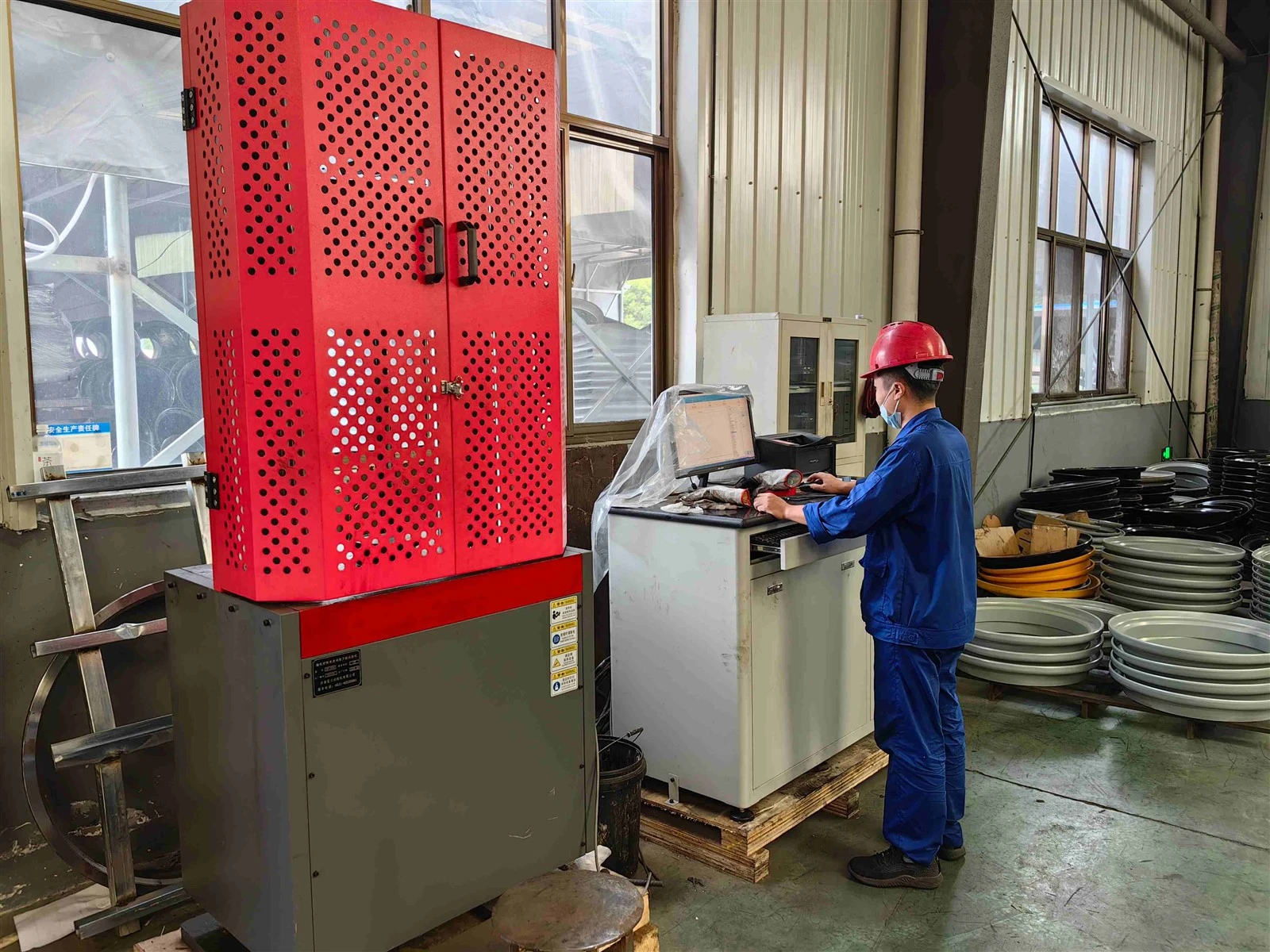
Take samples from each production batch for mechanical testing. Test items cover hardness, tensile strength and elongation. Test results verify whether heat treatment meets process requirements. All test records are kept for traceability.
5. On-site Pre-operation Inspection
Mine operators carry out inspection before putting rims into service.
Check bolt tightening torque; loose bolts cause uneven stress on the rim.
Confirm tire assembly condition, check for abnormal tire pressure.
Check contact surface between rim and tire for scratches or foreign objects.
6. Periodic Routine Inspection During Service
Set regular inspection cycles according to site working conditions. Focus on spoke root and hub transition areas, where cracks most often occur. If cracks, permanent deformation or abnormal bolt hole wear are found, stop using the rim immediately. Continue operation will expand defects and cause rim failure.
7. Inspection After Impact Accident
Inspect the rim completely after heavy impact or collision with rocks. Even without visible surface damage, internal microcracks may form. NDT inspection is recommended before putting the rim back into service.
Common Inspection Mistakes
Only check surface appearance and skip internal nondestructive testing
Ignore dimension runout and out-of-roundness
Skip inspection after rock impact incidents
Continue using rims once microcracks are found
Inspection of heavy-duty mining wheel rims covers factory testing and on-site periodic checks. Visual checking, dimension measurement, NDT and mechanical sampling work together to control rim quality. On-site regular inspection reduces failure risk during mining operation. Anqiang completes full inspection for all mining wheel rims before delivery. All test records can be provided upon request.
Contact Anqiang sales team for technical documents and quotation.