



Challenge, Action, and Resolution (CAR) Strategy Document
Operating heavy machinery in arid, high-temperature environments accelerates mechanical wear to unprecedented levels. The Middle East and North Africa represent some of the most lucrative yet punishing industrial zones globally. Here, extreme heat and abrasive sand dictate the lifespan of every moving part.
The Challenge: Thermal Expansion and Silica Abrasion
In the massive construction and oil exploration sites across the Arabian Peninsula and the Sahara, fleet managers confront two simultaneous destructive forces. First, ambient temperatures routinely exceed 50°C, causing significant thermal expansion in metal components. Second, ultra-fine silica sand infiltrates the microscopic gaps in multi-piece rims. When the metal expands and contracts, the sand acts like sandpaper, rapidly wearing down the locking rings and bead seats. This leads to sudden tire deflation. The local economic impact proves severe; delayed infrastructure projects incur massive government penalties, and procurement teams face astronomical air-freight costs attempting to rush emergency replacement parts into remote desert locations.
The Action: Precision Tolerances and Protective Coatings
We cross-referenced failure logs with engineering solutions and integrated products from AQrim into the regional supply chain. We determined that merely increasing the steel thickness failed to solve the abrasion issue. The solution required Modular Rims with incredibly tight machining tolerances to prevent sand ingress, coupled with a specialized high-temperature resistant coating. We mandated the use of a 100μm Polyurethane protective layer that deflects silica particles and reflects thermal radiation.
Project Integration Modules
⚬ Client Country: Saudi Arabia & Egypt
⚬ Project Time: May 2026 to July 2026
⚬ Storage Capacity: 45-Ton Sand/Gravel Storage Capacity
⚬ Product Model: 20-inch Locking & 10.0-20 two-piece steel wheel rim
⚬ Project Application: Desert highway construction and quarrying
⚬ Installation Cycle: 7 Days (Field retrofitting)
⚬ On-site Pictures:
[Image: Desert Construction Site]
⚬ Client Feedback: "The sand usually destroys our locking rings within weeks. These sealed tolerances have extended our component lifespan by a factor of four."
⚬ Project Results: Drastically reduced tire deflation incidents; accelerated highway construction timelines by avoiding logistics delays.
The definitive proof of performance lies in the dimensional accuracy of the locking mechanisms. When tolerances remain tight, sand cannot penetrate the assembly.
High-Performance Data Evidence:
Machining Tolerance Limit: ± 0.2 mm
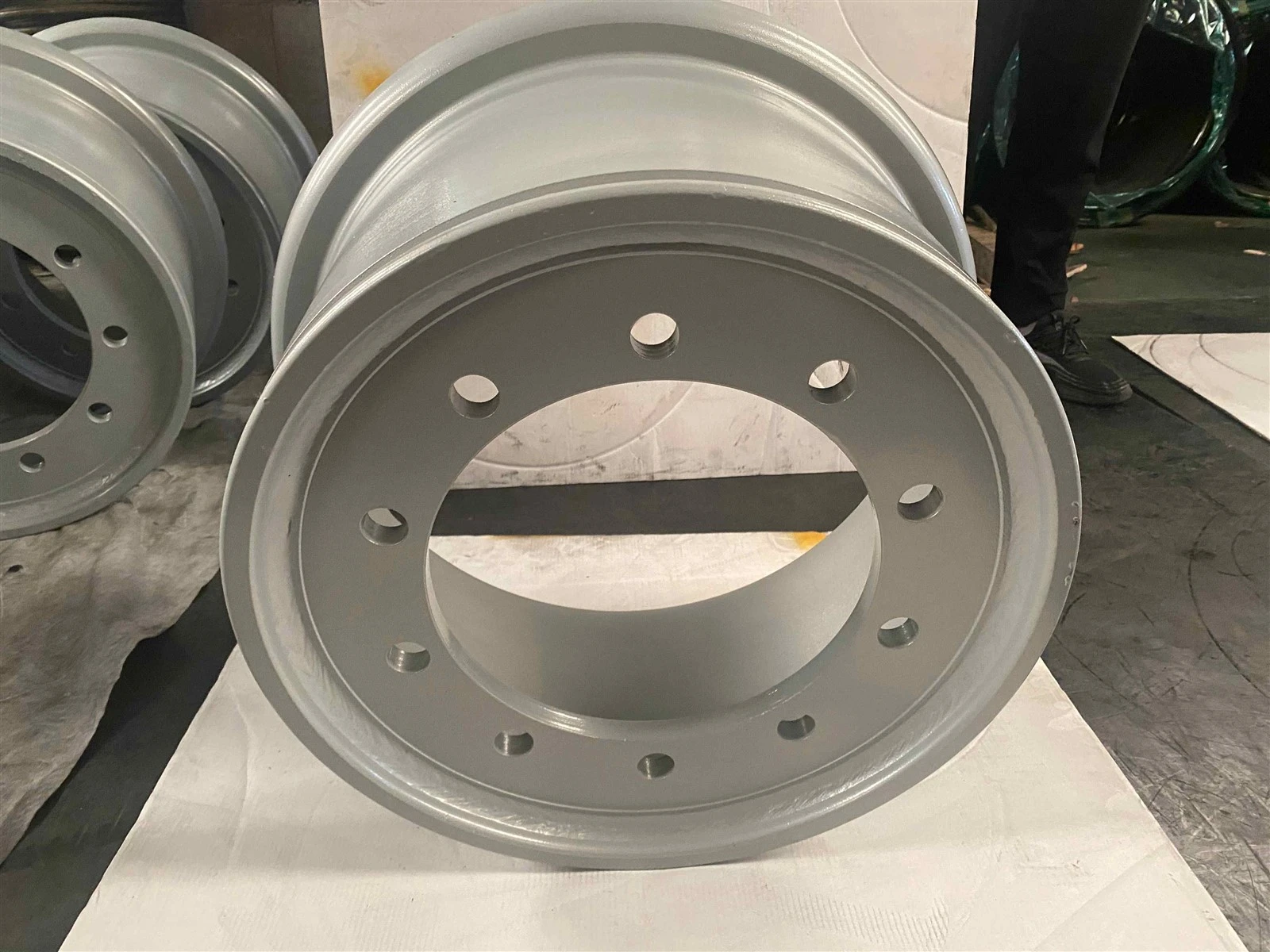


Desert Environment Specifications
| Component Vulnerability | Typical Industry Standard | Engineered Countermeasure | Resulting Advantage |
| Locking Ring Gap | ± 1.0 mm Tolerance | ± 0.2 mm Precision Fit | Blocks ultra-fine silica sand |
| Surface Protection | Basic Spray Paint | 100μm Polyurethane | Resists heat and sand blasting |
| Thermal Expansion | High Distortion | 16Mn Modular Design | Maintains structural shape |
| O-Ring Seal | Surface Mounted | Deep CNC Groove | Ensures hermetic sealing |
The broader industry implication dictates that environmental protection requires microscopic engineering. For governments overseeing multi-billion-dollar infrastructure mega-projects, enforcing strict component tolerances at the procurement level prevents massive downstream logistical failures.