


Regional application analysis | Indonesia and Australia
Start with the machine rather than the country
I would begin a mining wheel enquiry with the vehicle record, because a country name cannot establish rim compatibility. For buyers considering applications in Indonesia or Australia, the useful question is whether a particular wheel suits a particular truck, tyre, and operating duty. Anyang Anqiang Wheel Co., Ltd. lists a mining wide-body truck wheel designated 25-11.25/2.0 for a 16.00-25 tyre. That is a practical starting point for discussion, not proof that the supplier has installed the product at a mine in either country. This article examines a possible procurement problem using the published catalogue. It does not report a completed customer project.
The conflict behind an urgent replacement
A purchasing team may want the fastest available wheel, while the maintenance team wants a confirmed drawing, and the finance team wants fewer stored variants. These goals can conflict even when everyone wants the truck back in service. A wheel that arrives quickly can still cause a delay if its mounting details differ from the original assembly. I would ask the site to identify the truck configuration, wheel position, and current tyre before comparing offers. I would also separate a replacement for an existing approved assembly from a change to the assembly design. Those decisions require different levels of technical review and different evidence.
Read the listing without adding promises.
The supplier describes the selected wheel as a three-piece tubeless assembly and offers custom PCD, centre bore, and offset. PCD means pitch circle diameter; the centre bore describes the central opening; offset relates the mounting position to the wheel geometry. Customisation means these features need agreement, rather than assuming one listed rim fits every truck. The displayed offer is US$170–190 per set, with a one-set minimum order, as shown in the embedded catalogue evidence. These figures describe commercial access to the product. They do not establish a load rating, fatigue life, maximum operating pressure, or guaranteed service interval.
Product data for the proposed enquiry
|
Catalogue designation |
25-11.25/2.0 |
|
Listed tyre |
16.00-25 |
|
Construction |
Three-piece tubeless |
|
Displayed offer |
US$170–190 per set |
|
Minimum order |
1 set |
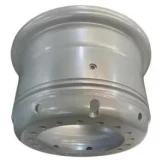
Supplier catalogue photograph; product illustration, not a customer site image.
Build a route from enquiry to approval.
I would send the supplier an approved wheel drawing or a complete original part reference, then ask it to return a drawing with the proposed assembly clearly identified. The site engineer should resolve any differences before the buyer agrees to production. The purchasing record should connect the approved design to the quotation, inspection requirements, and packaging list. A sample review can expose a misunderstanding before a larger order, although a sample alone cannot prove long-term reliability. The installation plan should follow the vehicle and wheel manufacturers' instructions, with competent personnel controlling the work. I would not publish an installation duration until the site records the actual process.
Explain the local effects carefully.
If the selected assembly passes approval and performs as required, a local distributor could hold a more useful spare, a contractor could reduce compatibility-related delays, and a mine could improve maintenance planning. Residents and public authorities would benefit only indirectly, through the wider project's continuity and responsible operation. I would describe those effects as potential outcomes, not confirmed improvements in Indonesian or Australian communities. A claim about jobs, productivity, or public services needs a defined project and evidence connecting the wheel supply to that result. The distinction matters because a component can support a project without being the main cause of its success.
Choose figures that actually show stability.
For this application, useful future evidence would include the approved load and pressure limits, measured runout, the fatigue test result, and wheel-related downtime during a defined service period. None of those numerical results appears in the accessible material reviewed for this article. The profile's annual wheel-rim capacity of 400,000 sets, reproduced in the evidence, is a supplier-reported production figure. It may help frame a supply discussion, but it cannot prove wheel stability. I would request the underlying test reports and their applicable part numbers before using any performance numbers in sales copy. A precise number persuades only when the test conditions also fit the claim.
Use the market information at its real scale.
The profile reports Southeast Asia at 12% of total revenue, shown in the regional evidence screenshot. It does not disclose an Indonesia-specific share, and it does not list an Australia-specific share. I would therefore describe Indonesia and Australia as target application markets in this analysis. Buyers can use https://hndhcl.en.alibaba.com to review the relevant product family and start a drawing-based enquiry. They should ask for destination-specific references if they need proof of prior delivery. A regional sales percentage cannot substitute for a named installation, a service record, or a local distributor agreement.
Project record and evidence status
Customer countries Indonesia and Australia - targets only | Project time Unavailable
Storage capacity Not applicable to wheel rims | Product model 25-11.25/2.0 - catalogue only
Project purpose: Mining haulage wheel procurement - proposed | Installation period: Unavailable
Site image Unavailable; supplier product image shown | Customer review Unavailable
Project effect Proposed only; no measured outcome
Carry the decision into the next report
The immediate recommendation is to approve the wheel definition before discussing the scale of an order. An enquiry becomes useful when both sides know which assembly the quotation covers and how the site will accept it. The remaining question is whether the cost comparison includes the consequences of a mismatch, not merely the listed price. Article 2 follows that question into Brazil and Peru, where the same catalogue offers a larger mining rim. The series will return to measured outcomes in Article 12. Until project records exist, the honest result here is a procurement method and a shortlist, rather than a claimed uptime improvement.
Embedded source evidence
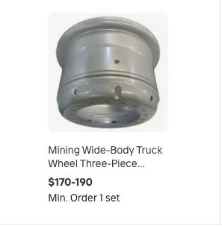
E1A Original catalogue card screenshot. Offer terms are observed, not destination-specific quotations. Source: supplier storefront, captured 5 October 2026.
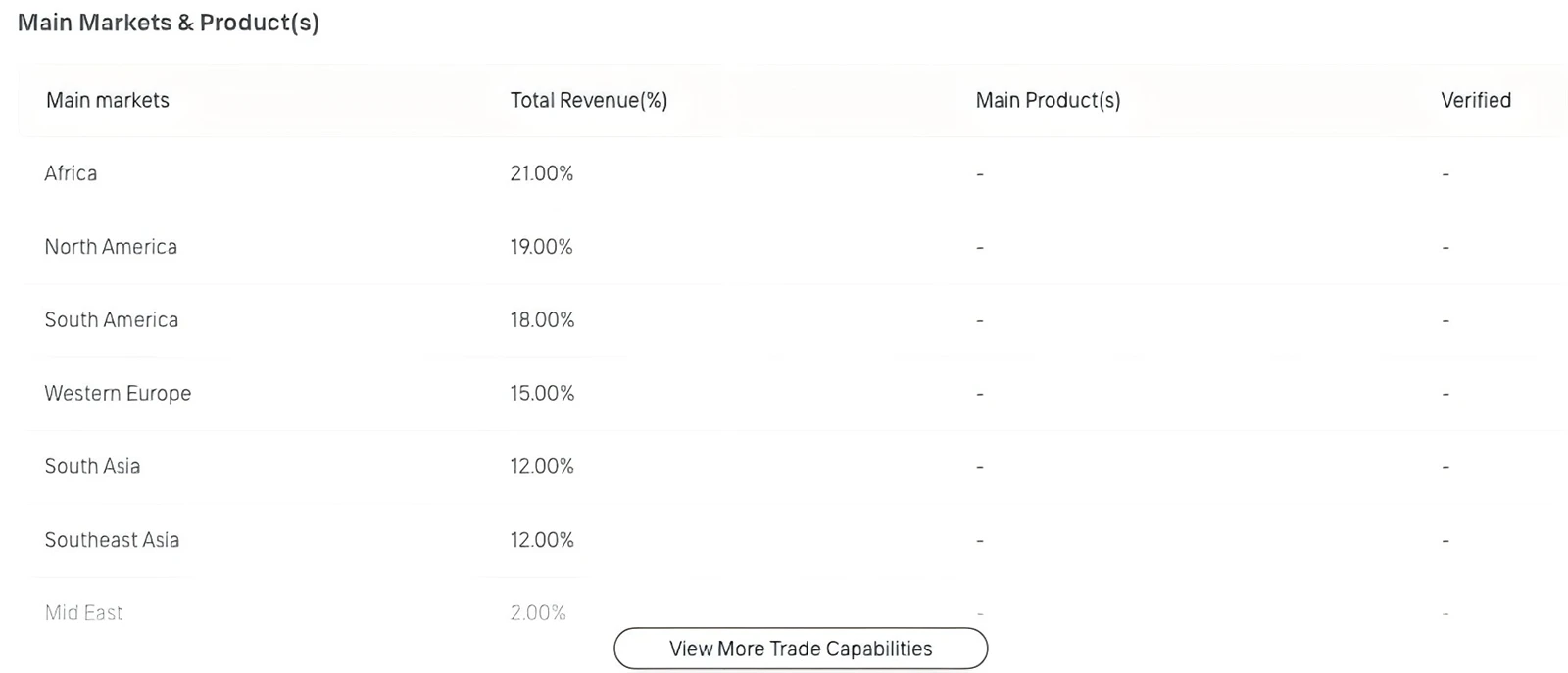
E1M Company profile screenshot. Figures are regional shares of total revenue; country shares, periods, and product allocation are not supplied. Source: supplier profile, captured 5 October 2026.

E1C Annual production table reports 400,000 wheel-rim sets. The verification field shows a dash. The reported factory scale does not prove product stability.